Introduction
Thinking about fertility and reproductive health can feel deeply personal and, at times, overwhelming. It is a part of health that touches on personal plans, partnerships, and future hopes. A dedicated fertility & reproductive health clinic in Singapore is a medical partner that understands this. These clinics provide a specialised, supportive environment to give you clarity and options, whether you are planning for a family, facing difficulties, or looking to preserve your options for the future.
This is a specific field of medicine that combines advanced science with compassionate, individual care. It connects directly to your overall women’s health, treating conditions and offering proactive solutions.
A fertility and reproductive health clinic in Singapore provides diagnostic services and treatments related to conception and gynaecological health. Key services include pre-conception screening, fertility testing for both partners, treatments like Ovulation Induction (OI), IUI, and IVF, as well as fertility preservation (egg freezing) and management of conditions like PCOS.
This specialised support is designed to meet you wherever you are in your process. It provides clear, actionable steps forward.
Table of Contents
- Understanding the Scope of Reproductive Health
- The First Step: When to Seek a Specialist’s Opinion
- Mapping Your Path: The Diagnostic and Screening Process
- Choosing Your Treatment: Core Services at a Fertility Clinic
- Proactive Planning: Fertility Preservation Services
- Managing Related Conditions for Better Outcomes
- Finding the Right Partner: What to Look for in a Singapore Clinic
- Navigating the Emotional and Financial Side of Treatment
- Conclusion: Taking the Next Step With Confidence
Understanding the Scope of Reproductive Health
Before diving into treatments, let’s clarify what “reproductive health” covers. It’s a broad field, and understanding its components can help you seek the right kind of help.
It’s More Than Just Conception
When people hear “fertility clinic,” they often think only of IVF. But that is just one part of the picture. Reproductive health encompasses your entire gynaecological system and its functions.
This includes:
- Hormonal Balance: The regular cycle of hormones that governs menstruation and ovulation.
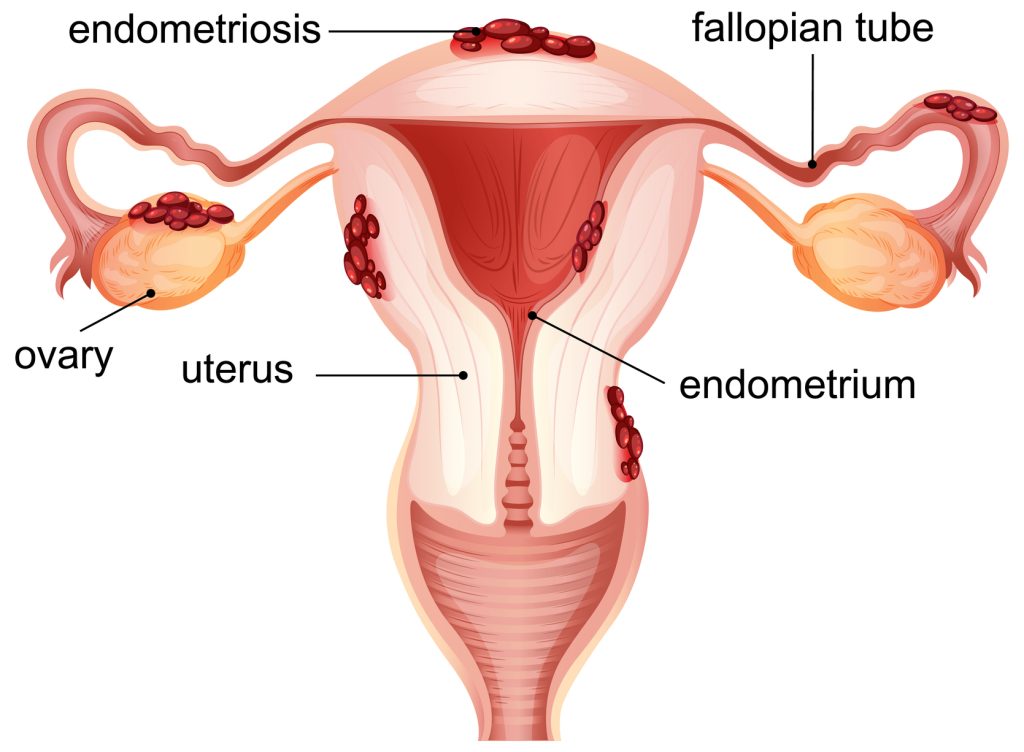
- Structural Health: The condition of the uterus, fallopian tubes, and ovaries.
- Ovulatory Function: The regular release of a healthy egg.
- Underlying Conditions: Managing issues like PCOS, endometriosis, or fibroids, which can affect more than just fertility.
A good clinic looks at this whole system. It aims to optimise your reproductive health, not just to pursue a single outcome.
The Line Between Gynaecology and Fertility Specialisation
So, when do you see your regular gynaecologist, and when do you need a fertility reproductive health clinic in Singapore?
Think of it this way: Your gynaecologist is your primary care doctor for your reproductive system. They manage your routine Pap smears, birth control, and general infections.
A fertility specialist, or a Reproductive Endocrinologist (RE), is a sub-specialist. You see them when you have a specific concern related to conception, recurrent miscarriages, or complex hormonal disorders. They have advanced training and tools to diagnose and treat these specific issues.
The First Step: When to Seek a Specialist’s Opinion
One of the most common questions is, “When is it time to get help?” It is a valid concern, and there are some clear medical guidelines.
General Guidelines for Consultation
The standard recommendation is to consult a specialist if you have been trying to conceive without success for:
- One year (12 months), if the female partner is under the age of 35.
- Six months, if the female partner is 35 or older.
This 35-year age mark is used simply because egg quality and quantity naturally decline more noticeably after this point, so a more proactive approach is often advised.
You should consider seeing a specialist even sooner, regardless of how long you have been trying, if you have a known condition like:
- Irregular or absent periods
- A history of pelvic inflammatory disease (PID)
- Known or suspected endometriosis
- Previous pelvic or abdominal surgery
- A partner with a known male-factor issue
What to Expect at Your First Appointment
The first visit is primarily a detailed conversation. It is not a high-pressure sales meeting. It is a medical consultation.
Your specialist will:
- Take a Detailed History: They will ask about your menstrual cycles, medical history, any past pregnancies, lifestyle factors, and your family’s medical history.
- Listen to Your Story: This is your time to explain what you’ve experienced and what your goals are.
- Outline a Diagnostic Plan: Based on your conversation, the doctor will suggest a set of initial tests. This is to get a clear baseline of your reproductive health. You will not be pushed into treatment. The goal is to gather information first.
Mapping Your Path: The Diagnostic and Screening Process
You cannot fix a problem until you know what is causing it. The diagnostic phase is perhaps the most important part of the entire process. It involves a series of tests for both partners to build a complete picture.
For Her: Assessing Ovarian Reserve and Hormones
This part checks the “engine” of the reproductive system: the eggs and the hormones that control them.
- Blood Tests (AMH, FSH): A simple blood test, often done on day 2 or 3 of your cycle, checks hormones like FSH, LH, and Estrogen. Another test, for AMH (Anti-Müllerian Hormone), can be done at any time. AMH gives a good estimate of your “ovarian reserve,” or your remaining egg supply.
- Ultrasound Scans (Antral Follicle Count): A transvaginal ultrasound (a simple, painless scan) allows the doctor to visually count the number of small, resting follicles (antral follicles) in your ovaries. This count, paired with your AMH level, gives a strong indication of your ovarian reserve.
Checking the Foundations: Structural Assessments
These tests make sure the “plumbing” is clear. An egg and sperm need a clear path to meet, and the embryo needs a healthy place to implant.
- Hysterosalpingogram (HSG): This is a classic test. A special dye is passed through the cervix, and an X-ray tracks its movement. It shows if the fallopian tubes are open (patent) and reveals the shape of the uterus.
- Saline Infusion Sonohysterogram (SIS): In this test, a sterile saline solution is gently introduced into the uterus while a doctor performs a transvaginal ultrasound. This “inflates” the uterine cavity slightly, making it much easier to see and diagnose any polyps, fibroids, or scar tissue inside.
The Full Picture: The Role of Male Factor Screening
This is critical. Fertility is a team sport. In roughly 40% of couples facing infertility, a male-factor component is involved. A female fertility test in Singapore is only half the story.
The cornerstone of male screening is a semen analysis. This test checks for three main things:
- Count (Concentration): Are there enough sperm?
- Motility: Are they moving well?
- Morphology: Are they shaped correctly?
This simple, non-invasive test provides a huge amount of information and is essential for a complete diagnosis.
Choosing Your Treatment: Core Services at a Fertility Clinic
Once all your test results are in, your specialist will sit down with you to discuss them and recommend a treatment plan. This plan is always tailored to you. It often moves from the simplest, least-invasive options to the more complex.
Level 1: Ovulation Induction (OI)
This is often the first step, especially for women with irregular cycles or PCOS.
- What it is: You take medication (either a pill like Clomiphene or Letrozole, or low-dose injections) to encourage your ovaries to mature and release one or two eggs.
- How it works: Your doctor tracks the egg’s growth with ultrasounds and blood tests. They will then tell you the “timed intercourse” window for you and your partner to try conceiving at home.
Level 2: Intrauterine Insemination (IUI)
This is the next level of assistance.
- What it is: This is a two-part process. First, you may use ovulation induction (as above) to mature an egg. Second, on the day of ovulation, your partner provides a semen sample.
- How it works: The lab “washes” the sample, concentrating the healthiest, most motile sperm. Then, a doctor uses a very thin, flexible catheter to place this concentrated sample directly into the uterus. This bypasses the cervix and gives the sperm a significant head start.
Level 3: In-Vitro Fertilisation (IVF)
IVF is the most well-known and effective form of assisted reproductive technology (ART).
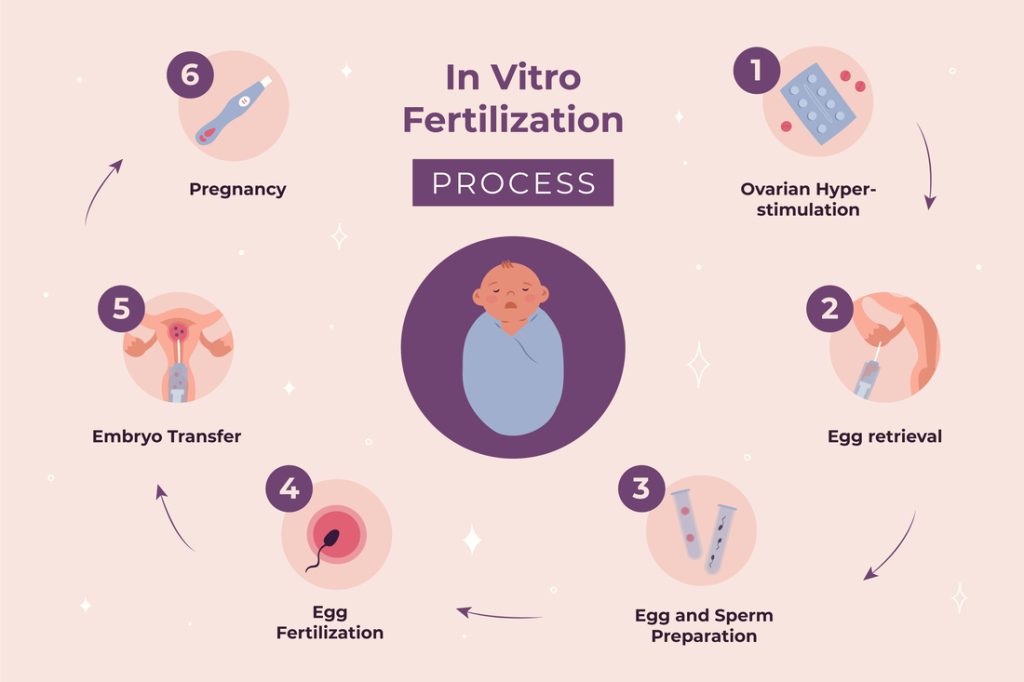
- The IVF Process Explained Simply:
- Stimulation: You take daily injections of hormones for about 10-14 days to stimulate your ovaries to grow multiple eggs at once.
- Egg Retrieval: This is a short, minor surgical procedure done under sedation. The doctor uses a needle guided by ultrasound to collect the eggs from your ovaries.
- Fertilisation: In the lab, the retrieved eggs are combined with sperm to create embryos.
- Embryo Transfer: A few days later (3-5), the best embryo is selected and transferred directly into your uterus using a small catheter.
- Intracytoplasmic Sperm Injection (ICSI): This is a technique used during IVF, especially for male-factor issues. Instead of just placing egg and sperm in a dish together, an embryologist injects a single, healthy sperm directly into the center of the egg to ensure fetilisation.
Proactive Planning: Fertility Preservation Services
A modern fertility reproductive health clinic in Singapore is not just for those trying to conceive right now. It also empowers individuals to plan for the future.
Social Egg Freezing: Taking Control of Your Timeline
This has become a very common and powerful option. It involves doing the first two steps of an IVF cycle (Stimulation and Egg Retrieval) and then freezing the collected eggs. This stops the “biological clock” for those eggs, preserving their quality at your current age. You can then use them years later when you are ready to start a family.
Medical Egg Freezing (Oncofertility)
This is a vital service for women diagnosed with conditions like cancer. Before starting treatments like chemotherapy or radiation, which can harm the ovaries, a woman can quickly freeze her eggs. This preserves her option to have biological children after she has recovered.
Managing Related Conditions for Better Outcomes
Sometimes, the path to conception is blocked by an underlying health issue. A comprehensive clinic will diagnose and treat these conditions first to improve your overall health and chances of success.
PCOS and Endometriosis Management
- PCOS (Polycystic Ovary Syndrome): For women with PCOS, the main challenge is often irregular or absent ovulation. A specialist can manage this with lifestyle advice, medication (like Letrozole) to induce ovulation, or, if needed, IVF.
- Endometriosis: This condition can cause pain and create inflammation that makes conception difficult. A specialist may recommend medical management or laparoscopic (keyhole) surgery to remove the endometrial tissue before proceeding with fertility treatments.
Surgical Interventions (Fibroids, Polyps)
If your diagnostic tests (like the SIS) find fibroids or polyps inside the uterine cavity, they can act like a barrier to implantation. A specialist can perform minimally invasive hysteroscopic surgery to remove them, creating a more receptive environment for an embryo.
Finding the Right Partner: What to Look for in a Singapore Clinic
Choosing a clinic is a big decision. This will be a team you work with closely on a very personal matter.
The Importance of a Supportive, Individualised Approach
Look for a clinic where you feel heard, not hurried. Does the doctor explain things clearly? Do they answer all your questions? You will be seeing them a lot, so this relationship matters. The clinic’s philosophy should be about your specific case, not a one-size-fits-all protocol.
Understanding Lab Technology and Success Rates
The quality of the embryology lab is a huge factor in IVF success. Do not be afraid to ask about their lab’s accreditation and technology. When you look at success rates, ask for data broken down by age. A clinic’s overall success rate is less important than its success rate for women your age. This gives you a much more realistic picture.
Navigating the Emotional and Financial Side of Treatment
A good clinic understands that this process is not just physical. It has practical and emotional layers that need tobe acknowledged.
Addressing the Cost: What to Ask
Fertility treatment is a significant investment. A transparent clinic will have a financial coordinator who can sit with you and explain the costs. In Singapore, there are government co-funding schemes and an ability to use MediSave for certain treatments. Ask your clinic for a detailed breakdown and information on what subsidies you may be eligible for.
Coping with the Emotional Process
The path of fertility treatment can have highs and lows. It is normal to feel a mix of hope, anxiety, and frustration. A supportive clinic will have resources, such as in-house counsellors or recommendations for support groups. Having a strong support system, both in the clinic and at home, is invaluable.
Conclusion: Taking the Next Step With Confidence
A fertility reproductive health clinic in Singapore is a place of specialised knowledge, advanced technology, and human compassion. It is far more than just “an IVF clinic.” It is a partner that offers a 360 approach, from diagnostics and proactive planning with pre-conception screening to managing complex conditions.
Whether you are just beginning to plan, are facing challenges, or are securing your future options, the goal is the same. It is to get clear answers and create a personalised, effective plan. Taking that first step to ask questions is often the most empowering one you can make.
Speak to us about the next steps in your health and fertility options.